

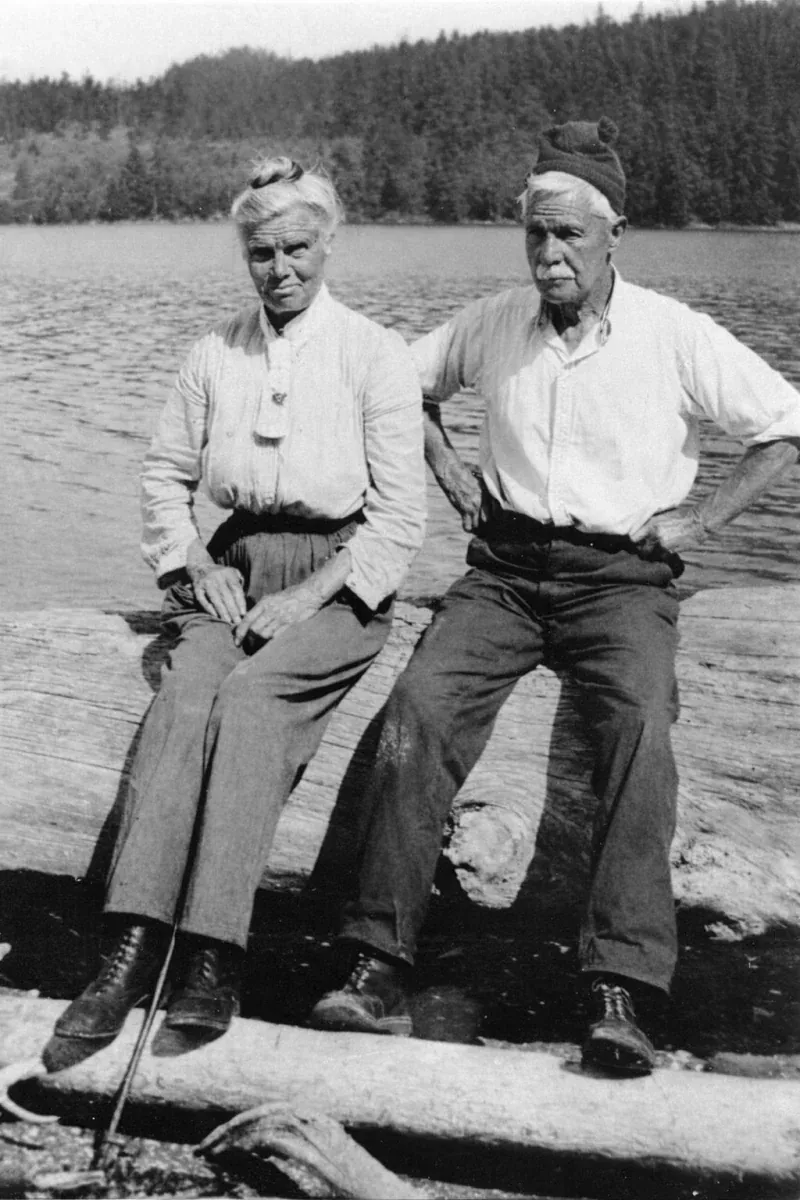
Mary Aldridge is one of the featured women in the Museum’s newest exhibit, Honouring Island Women. We’ve had to keep the display labels brief, but there’s always so much more to tell. We are fortunate to have a 1990s write-up by the late David Spalding, a South Pender historian, who knew Mary personally.
Mary Letitia Blanche Horwood was born in England in 1874. Her husband, Augustus Henry Aldridge (“Gus”), was born in England in 1866, attended medical school in London, and became a doctor in 1890. Mary and Gus Aldridge spent nearly 60 years on the two Pender Islands.
As David Spalding writes, “I think Mary suffered from tuberculosis and they decided to leave England for BC. In 1907 they bought five acres on Gowlland Point, the perfect place for Mary to breathe the health-giving air necessary to protect her lungs. They remained there until WWI.
“In 1914, they returned to England. Augustus volunteered as a doctor in the army and Mary as a farm worker. (WWI records for the original “women’s land army” are scant, so Mary would have been a trailblazer in this effort.)
“Following the war, they returned to BC; this time, however, Augustus and Mary decided to live on North Pender. They purchased 89 acres on Shark Cove and Browning Harbour. They may well have settled there both for the farming potential and the excellent moorage provided by this little cove.
“The Aldridges operated a small farm: chickens, some sheep, a few cows, several fields for pasture and crop-growing, and a vegetable garden. Mary did a lot of the outdoor work. She ploughed the land and planted and harvested the crops. She did the milking as she regularly shipped cream to the Saltspring Island creamery. In essence it was Mary who kept the place going.
“Mary and Augustus protected their privacy. Yet in their own way, they both felt a strong responsibility to their neighbours and their community. Dr. Aldridge did not officially practice medicine, but he was always available to help in an emergency. During the Depression in the 1930s, Mary very discreetly made sure – through an arrangement with Percy Corbett who ran the general store at Hope Bay – that those in need were not without food or clothing.
“Augustus died in 1951, and Mary arranged for her niece Phyllis Mumford to come out from England to live with her and take over the farm. (The Aldridges had no children.) When Mary’s health deteriorated in the late 1950s, she moved into a home for the elderly in Sidney. She died at age 90 in 1965.”
Mary was buried in Victoria, but Pender friends had a gravestone made to acknowledge this well-respected island couple. They placed it on the previously unmarked grave of Dr. Aldridge in the Pender Cemetery.
Next time you play with your kids in the school playground or park at the Health Centre, it’s worth remembering you’re on land that was farmed by the remarkable Mary Horwood Aldridge.
Excerpted from “The Aldridge Family of the Two Penders”, by David J Spalding